
Renovation
Commercial Remodeling in Florida: How to Upgrade Business Spaces While Keeping Operations Running
November 16, 2026 · 7 min read
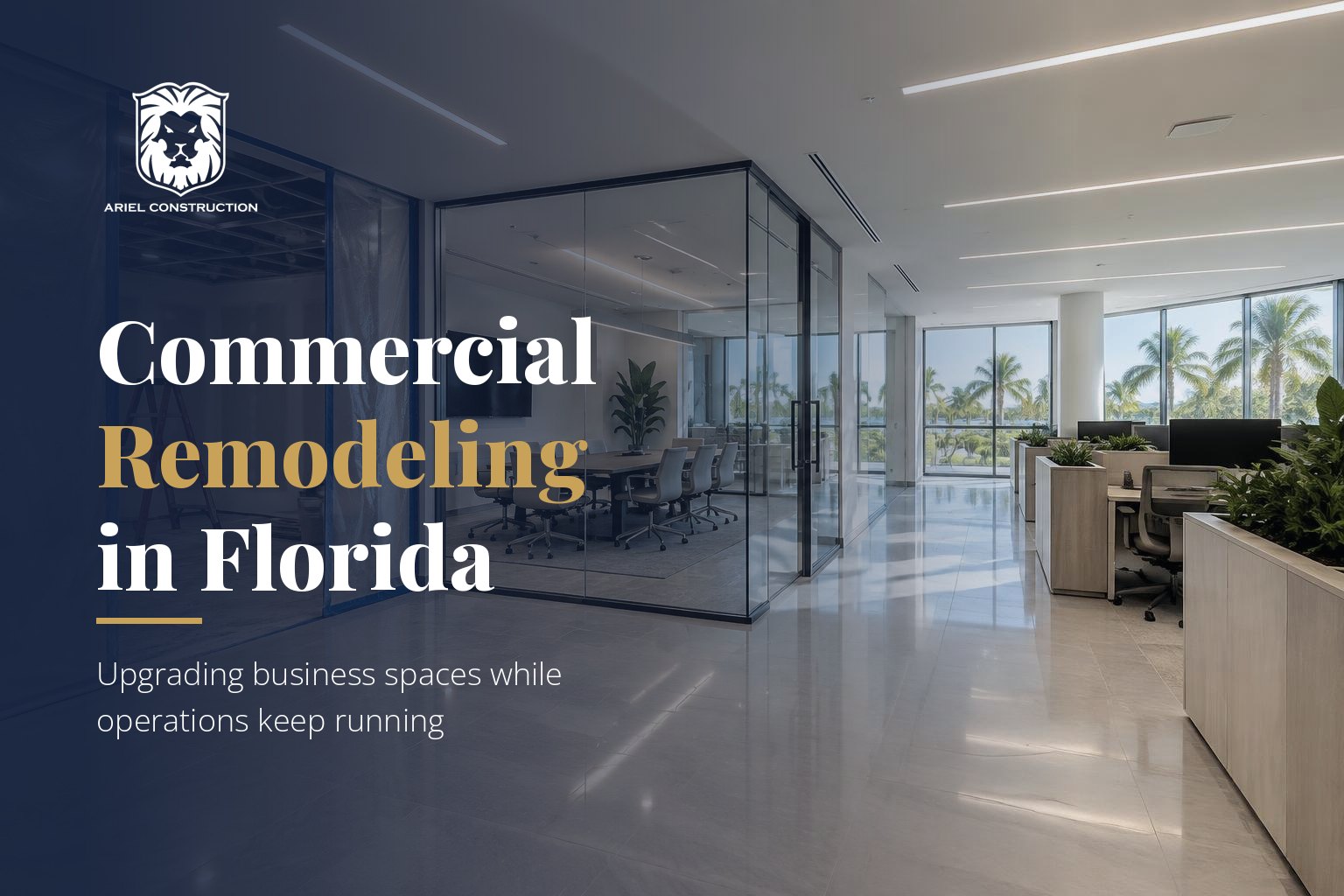
Most commercial remodels in Florida don't start with an empty building. They start with a dental office that still sees patients every morning, a Fort Lauderdale retailer that can't lose a weekend of sales, or a Boca Raton office floor where half the team still comes in. The real challenge of commercial remodeling in Florida isn't the drywall or the flooring. It's changing a space while people keep using it, in a climate that punishes the wrong material choices. This guide walks through what owners, property managers and tenants should think about before a remodel begins: why businesses are investing now, how to phase the work, what the Florida environment demands, and how to pick a contractor who can carry it through.
Why Florida Businesses Are Investing in Commercial Remodeling
A lot of South Florida's commercial inventory was built decades ago. The shells are often sound, but the interiors were laid out for a different way of working: private offices along every window, oversized reception areas, fluorescent lighting and restrooms that no longer meet current accessibility expectations.
Owners usually remodel for one of a few reasons:
- Tenant retention and leasing. A dated suite in Coral Gables or West Palm Beach is harder to lease than an updated one, and landlords often refresh common areas and vacant suites to compete.
- A change in how the space is used. Offices are shrinking private rooms in favor of meeting space, and retailers are reworking floors for pickup counters and fewer fixtures.
- Aging systems. HVAC, lighting and electrical equipment near the end of its life is often the trigger, and opening walls to replace it is the natural moment to rethink the layout.
- Operating costs. Cooling dominates energy bills in Florida, so efficiency upgrades tend to pay attention back faster here than in milder climates.
What Different Commercial Spaces Need From a Remodel
Commercial building remodeling isn't one type of project. The priorities shift with the use.
Office Remodeling in Florida
Office remodeling in Florida usually centers on layout and comfort. Teams want a mix of focus rooms, collaboration space and fewer closed offices. Watch the HVAC zoning when walls move: a new conference room carved out of an open area can easily end up too warm if supply and return air aren't rebalanced to match.
Retail Space Remodeling in Florida
Retail space remodeling in Florida is driven by the sales floor. Lighting, fixture layout, fitting rooms and storefront presentation matter most, and the work is often squeezed into overnight hours so the store stays open. In shopping centers, landlord criteria and center rules on deliveries and work hours shape the schedule as much as the construction itself.
Restaurants and Hospitality
Restaurants and hotels add kitchen ventilation, grease interceptors, fire suppression and health department review to the list. For hospitality properties in Miami or Hollywood, rooms and public areas are commonly renovated in blocks so the property keeps selling the rest of its inventory.
Medical and Other Specialized Facilities
Clinics and medical offices need careful attention to infection control, plumbing at exam rooms and, often, stricter separation between work areas and occupied patient space.
Planning a Remodel Without Shutting Down the Business
The best time to protect your operations is before demolition, not during it.
Start With How the Space Is Used Today
Walk the space with the people who run it. Which rooms can go offline, and for how long? When are deliveries? Which hours bring in the most revenue? A restaurant that does most of its business on weekend nights has a very different construction window than a law office that empties at 6 p.m.
Phased Remodeling
Phasing splits the project into zones that are completed one at a time while the rest of the space keeps working. A typical office sequence might look like this:
Each phase adds some setup time and cost, so the plan should balance disruption against schedule. Fewer, larger phases are often more efficient when the business can tolerate them.
- Build temporary walls and dust barriers around the first zone.
- Relocate staff from that zone to a vacated area or temporary seating.
- Complete demolition, rough-in, inspections and finishes in that zone.
- Move staff into the finished area and start the next zone.
Scheduling and Coordination
Noisy work such as demolition, core drilling and cutting is usually pushed to nights or weekends, and that has to be cleared with building management in advance. Agree early on who the single point of contact is, how changes in schedule will be communicated to staff, and how life-safety items such as exits and fire alarms stay working at every stage.
Florida-Specific Considerations for Commercial Renovation
Commercial renovation in Florida carries conditions that owners from other regions sometimes underestimate.
Humidity and Moisture-Resistant Materials
Humidity is the quiet risk. Choose moisture- and mold-resistant gypsum board in wet and perimeter areas, flooring and adhesives rated for the conditions, and finishes that tolerate humid air. Equally important is controlling humidity during construction: when the HVAC is shut down or the building is opened up for days, materials can absorb moisture before they're even installed.
Energy Efficiency
Because cooling is such a large share of operating costs, a remodel is a good time to look at LED lighting with controls, properly sized and zoned HVAC, and better sealing around penetrations. The Florida Building Code includes an energy conservation volume, so efficiency requirements may apply to the parts of the system you alter.
Building Codes and Permits
Commercial work in Florida is governed by the Florida Building Code, adopted statewide and enforced by local building departments. Miami-Dade, Broward and Palm Beach each have their own review processes, and individual cities run their own departments too. Exterior products such as storefronts and windows in high-velocity hurricane zones need specific product approvals. Permit review time should be built into the schedule from the start rather than treated as a formality.
Improving Functionality: Layout, Lighting and Accessibility
A commercial interior renovation is the chance to fix what never worked. Look at circulation: how people and goods move through the space. Brighter, more even lighting can make a dated suite feel new without moving a single wall. Accessibility deserves early attention, because the Florida Accessibility Code for Building Construction can require upgrades to restrooms, entrances and routes when you alter a space. Planning those upgrades into the design is far easier than discovering them during plan review.
Modernizing Aging Commercial Buildings
Older buildings often hide surprises above the ceiling and inside walls: abandoned wiring, undocumented plumbing or framing that doesn't match the drawings. A pre-construction survey of existing conditions helps reduce those surprises and gives everyone a more realistic scope. Modernizing older systems now also tends to make the next tenant change simpler, which improves long-term usability for owners.
How to Choose a Commercial Remodeling Contractor in Florida
When you interview a commercial remodeling contractor in Florida, look past the portfolio photos and ask:
Firms that regularly take on commercial construction projects in South Florida will understand the local mix of codes, climate and building-management rules without needing to learn them on your project.
- How do you handle occupied-space work? Ask for a sample phasing plan or describe one from a similar project.
- Who manages permits and inspections? You want someone who knows the local building departments, not someone learning them on your job.
- How are changes priced? A clear scope and an agreed process for changes protect your budget.
- Who is on site day to day? A consistent superintendent matters more than a large company name.
- Can you show similar work? Look for projects of comparable size and use in the region.
Planning Your Next Step
A well-run remodel starts with a clear picture of how your business operates, an honest look at the existing building and a schedule built around both. Whether it's commercial remodelling in Florida for a single suite or a multi-floor upgrade, those early decisions shape cost, disruption and the final result more than anything that happens later.
If you're weighing a project, Ariel Construction's team can talk through your space, your timeline and how the work could be phased. Learn more about our commercial remodeling services and start the conversation when you're ready.
Planning a commercial interior project?
Transparent pricing, one contract, and a schedule we commit to — across New York, Texas and Florida.
Contact UsRelated Reading
Industry Guides
Commercial Contractor in Florida: Building Better Business Spaces Across Multiple Industries
Remodeling
Commercial Remodeling in Dallas: How to Transform Business Spaces for Better Functionality and Performance
Renovation
Commercial Renovation in Dallas: A Complete Guide for Businesses Planning Commercial Property Upgrades